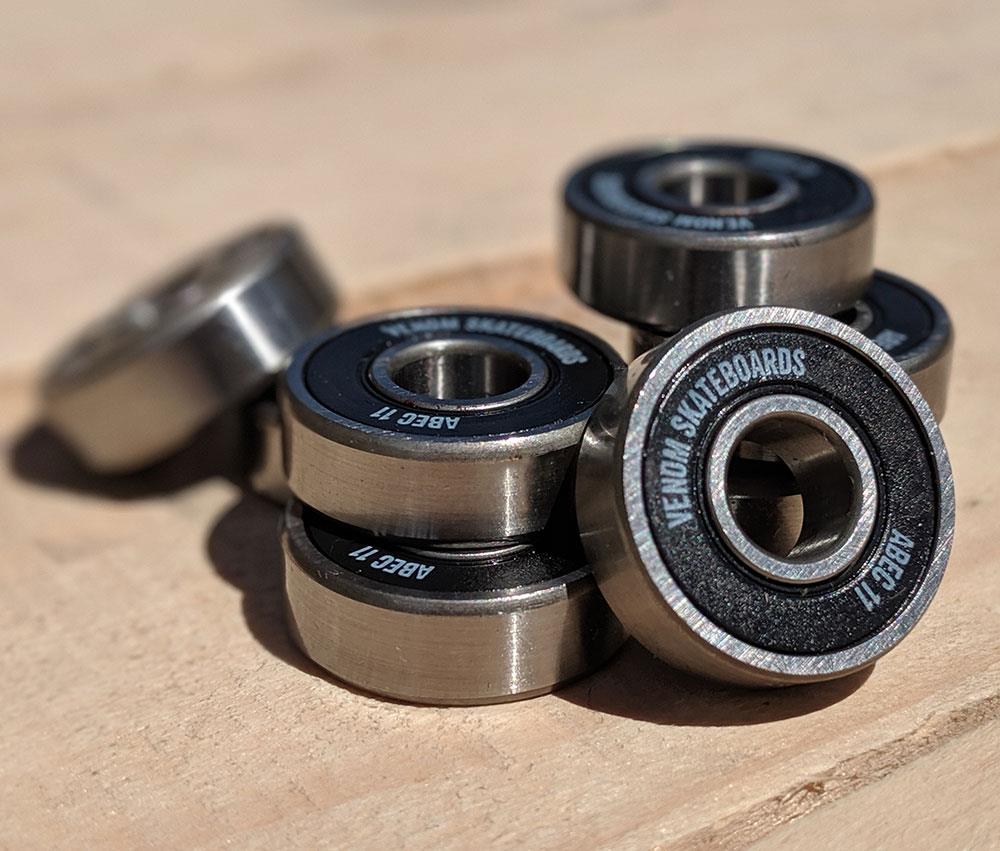
Skateboarding has always been about progression—not just in tricks and style, but in the gear beneath your feet. One of the most important (and often overlooked) components of a skateboard is its bearings. Over the decades, skateboarding bearings have evolved dramatically, helping riders go faster, smoother, and bigger than ever before.
In the early days of skateboarding in the 1950s and 60s, boards often used clay or even repurposed roller skate wheels with basic steel bearings. These early bearings weren’t designed for the demands of street skating, bowls, or vert ramps. They were slow, prone to rust, and required frequent maintenance.
As skateboarding exploded in popularity during the 1970s—thanks in part to pioneers like Tony Alva—manufacturers began producing bearings specifically for skateboarding. Precision steel bearings became more common, improving durability and roll speed. Around this time, the ABEC rating system (originally designed for industrial machinery) started being used to market skateboard bearings, even though high ABEC ratings didn’t always translate to better performance for skaters.
By the 1990s and 2000s, specialized skate brands refined bearing design further. Removable rubber shields made cleaning easier, while improved lubrication reduced friction. Ceramic bearings entered the scene, offering lighter weight and greater resistance to heat and corrosion—though at a higher price point.
Today’s skateboard bearings are engineered specifically for impact, dirt, and the unique stresses of tricks. From budget steel sets to high-end ceramic hybrids, modern bearings reflect decades of innovation. What started as a basic mechanical part has become a finely tuned performance component—helping skateboarders push the limits of speed and creativity.


Leave a Reply